Resources to take your PFD Clinical Skills to the Next Level
Pediatric Feeding Mentorship Group
Self-Paced
Assessment through Intervention
I took the original PFMG and recorded/updated modules to bring it to you entirely self-paced.
If you've been wanting to take this course, but haven't been able to commit to the live sessions - here is your chance to still get all the content!

What's included in the PFMG?
Modules
Resources
DID YOU KNOW?
Even with the self-paced nature of this course, you will still get the benefits of application into real cases and clinical scenarios! Plus, you have 6 months of access to complete modules and download resources, which, given the dynamic nature of research and clinical practices, still allows for me to ensure you are getting the most up to date information when you take the course!
Course Outline
Week 1
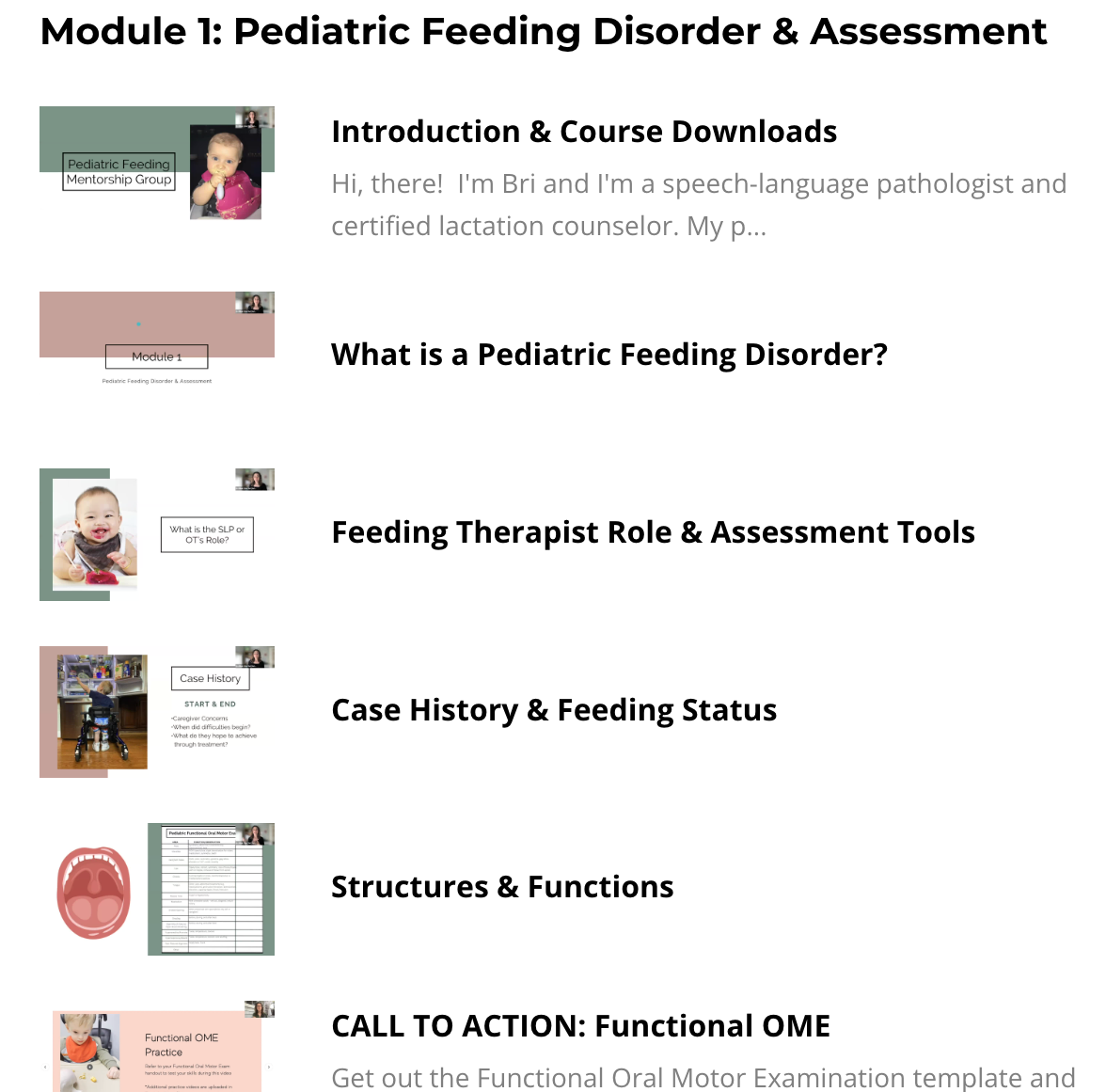
PFMG Intro & What is a Pediatric Feeding Disorder?: 27 minutes
SLP Role & Assessment: 45 minutes
- Assessment Tools
- Case History & Feeding Status
- Functional Oral Motor Examination
- Cranial nerves involved with feeding and swallowing
Practice Videos: 27 minutes
- Call to Action Introduction
- Different Types of Mastication Practice
- Bonus Videos! Context Specific Oral Motor & Practice Oral Motor Exam
Call to Action Explanation: 23 minutes
Handouts
- Comprehensive Dysphagia Assessment Tool
- Functional OME Template and Sample
- Cranial Nerves Resource
- Sample Evaluation Reports - Breastfeeding, Autism, & Cerebral Palsy
Total Time: 2 hours
Week 2
Signs/Symptoms & Referrals: 35 minutes
- Signs/Symptoms for referrals to the following disciplines: allergist, cardiologist, craniofacial team, ENT/otolaryngologist, dentist, orthodontist, orofacial myologist, endocrinologist, dietitian, gastroenterologist, geneticist, lactation consultant, neurologist, pulmonologist, PCP, OT, PT, developmental pediatrician, psychologist, counselor, social worker
- Common related diagnoses associated with feeding and/or swallowing difficulties
How to Network & Build a Team: 10 minutes
Case Studies/Call to Action Introduction: 7 minutes
Call to Action Explanations: 53 minutes
Handouts
- Signs and Symptoms and Referrals
- Common Related Diagnoses
- Sample Referrals & Cover Sheet
Total Time: 1 hour 32 minutes
Week 3
Intervention Overview & Responsive Feeding: 18 minutes
Experience-Dependent Neuroplasticity, Motor Learning, & Interdisciplinary Collaboration: 25 minutes
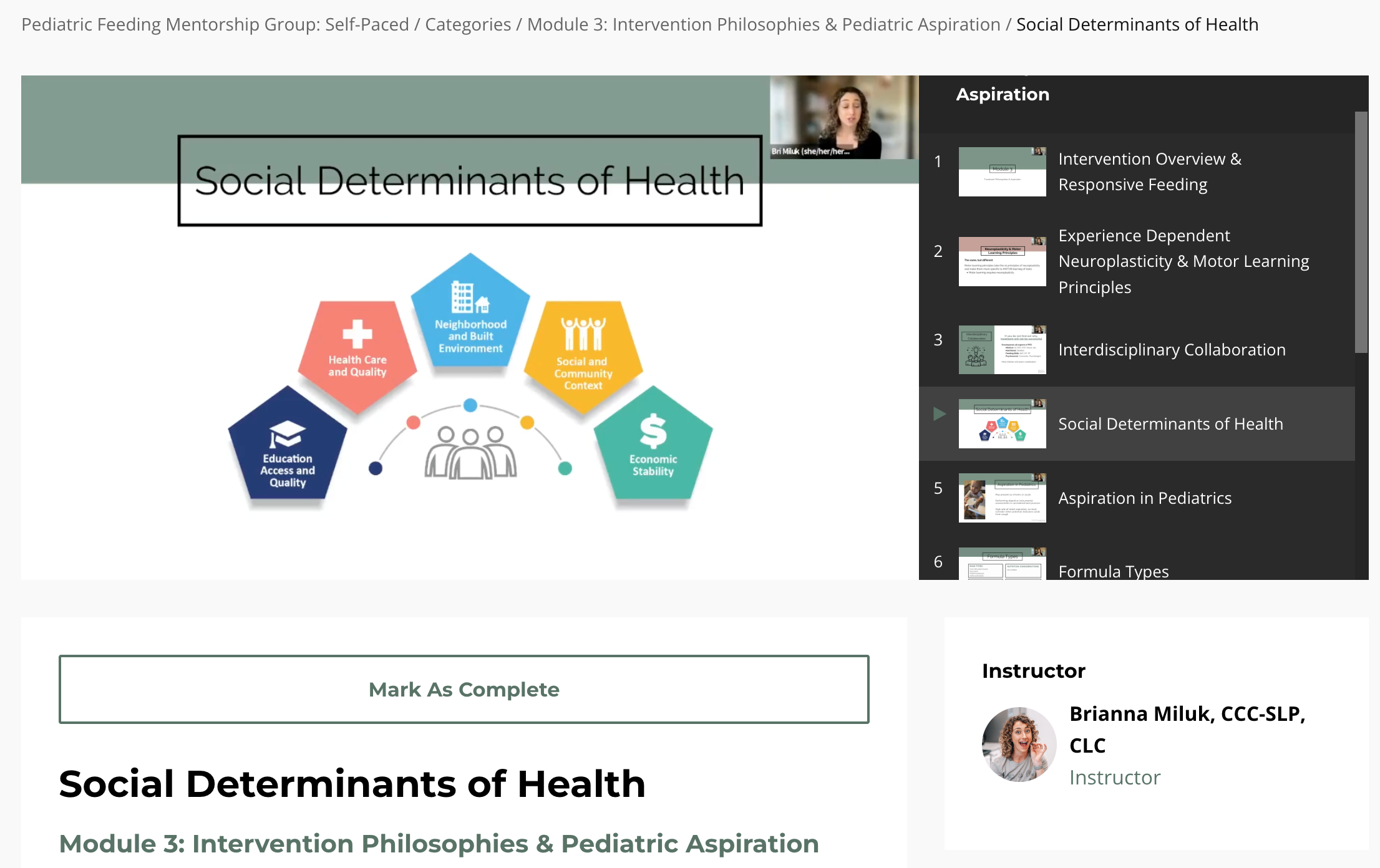
Social Determinants of Health: 26 minutes
Aspiration in Pediatrics & Interventions: 33 minutes
- How to manage/treat, including, but not limited to: thickeners, nipple flow rates, positioning, & systematic weaning protocol
IDDSI: 18 minutes
- International Dysphagia Diet Standardization Initiative (IDDSI) overview
Practice Videos: 7 minutes
- Call to Action & Bonus Video Identifying Intervention Philosophies in Action
Call to Action Explanation: 8 minutes
Handouts:
- Thickener Guide: Considerations and Contraindications
- Intervention Philosophies
- Bottle weaning
- Formula types
- Bottle nipple flow rates
Total Time: 2 hours 22 minutes
Week 4
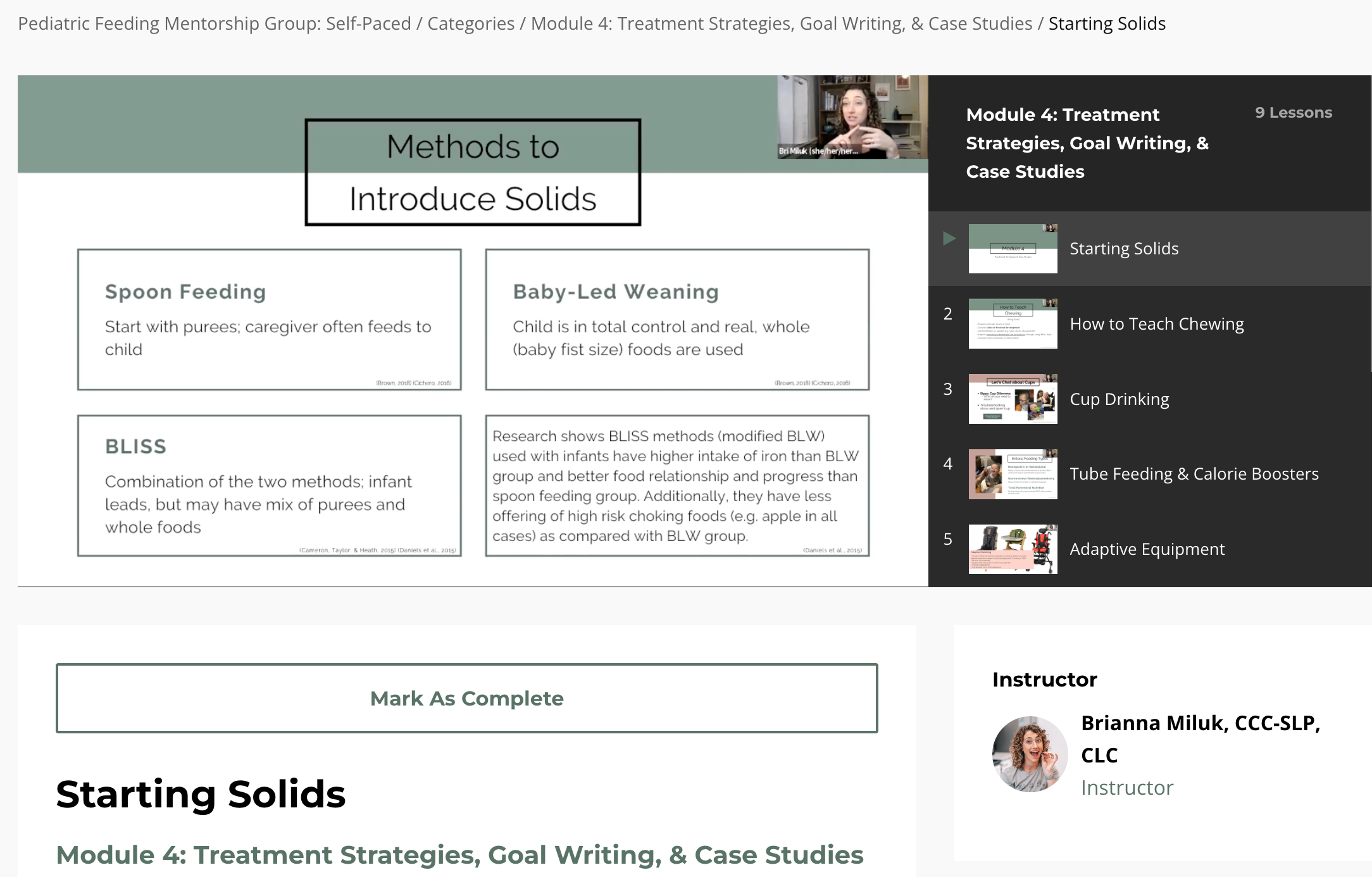
Starting Solids: 17 minutes
Intervention Strategies: 26 minutes
- how to teach chewing
- straw and open cup drinking
- adaptive equipment
Tube Weaning: 13 minutes
Goal Writing: 5 minutes
Case Studies & Final Thoughts: 48 minutes
- 10 case studies to practice application of knowledge & skills
Handouts:
- Adaptive seating
- Starting solids tips
- Tube feeding/weaning
- Goal writing tips
- Goal bank
Total Time: 1 hour 49 minutes
What does self-paced really mean?
I took the call to actions that are normally discussed live and recorded them for you to view alongside the course! So, instead of a 4-week course with set meeting times, you get 6 months to complete the course at your own pace!
I'm in! Register Here!
Testimonials
"The information provided came in digestible chunks week to week for someone like me with little experience. I felt I was able to retain a lot of the information, and now have some great reference material for the future."
-Past PFMG Participant
"I've taken numerous pediatric feeding courses in the past but was overwhelmed by information and had a difficult time pertaining it to my caseload. This mentorship program was perfect. It broke down all of the knowledge... and I was able to go at my pace (especially while working full-time). I highly suggest this to anyone who wants to increase their competency in pediatric feeding."
-Past PFMG Participant
"I would recommend this course to anyone who would like to learn more about PFDs and the application of how to go about treating them. I feel so motivated to go out there and be a part of a team that helps all the littles struggling with meal times. I feel more empowered to apply my knowledge. For context, I took a very popular feeding seminar and felt like I didn't even know where to begin after taking those full days of continuing education."
-Past PFMG Participant


Additional Course Information
Learner Outcomes
What to Expect After Signing Up
How to Earn ASHA CEUs
Target Audience
Disclosures
Pricing
Refund and Grievance Policies